Jordan Reed · 2 September 2026
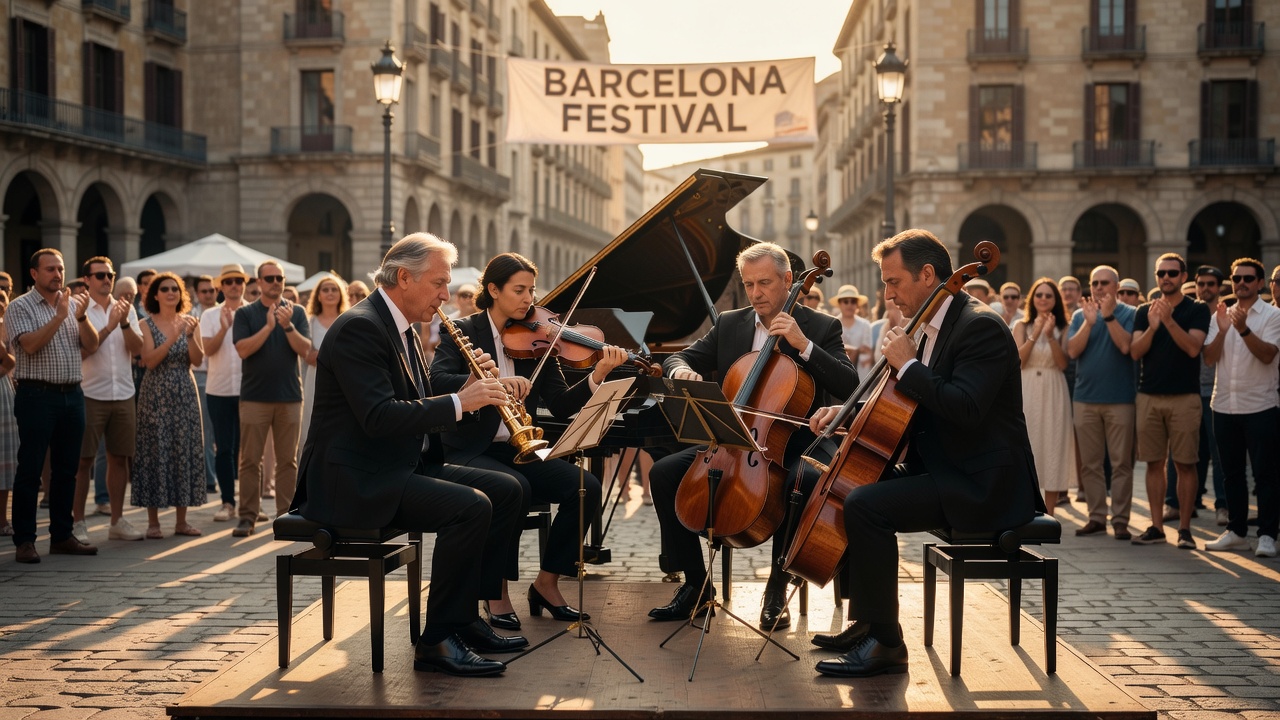
The Tenora Quartet introduced its latest composition to an enthusiastic crowd at the Barcelona Music Festival. The ensemble performed "Shadows of Montjuïc," a new piece by composer Elena Puig that explores the expressive range of the traditional Catalan tenora. The event took place at the historic Palau de la Música Catalana and drew musicians, scholars, and local audiences interested in the evolution of regional instruments.
The Performance Highlights
The quartet opened with a series of short motifs that gradually built into layered harmonies. Each tenora player employed subtle dynamic shifts and extended breathing techniques to create atmospheric textures. Festival attendees noted the seamless transition from lyrical passages to rhythmic sections influenced by Sardana dance forms. The performance lasted approximately forty-five minutes and concluded with sustained tones that resonated through the venue's vaulted ceiling. Reviews from local critics highlighted the quartet's technical precision and the composition's ability to honor the tenora's nineteenth-century origins while incorporating contemporary phrasing. The group, formed in 2015, includes musicians who trained at the Conservatori Superior de Música del Liceu and have previously toured venues in France and Italy.
Workshops held alongside the concert allowed participants to examine reed construction and fingering variations specific to the tenora. These sessions underscored the instrument's role in cobla ensembles and its distinctive timbre that sits between woodwind and brass families. Attendance at the workshops exceeded expectations, with many students traveling from other parts of Catalonia and neighboring regions.
Significance in Tenora Tradition
This premiere contributes to ongoing efforts to expand the tenora repertoire beyond traditional folk settings. Puig's score integrates microtonal inflections and aleatoric elements that encourage performers to interpret certain passages differently each time. Such approaches reflect broader trends in European new music while remaining rooted in the cultural practices of Catalonia. Organizers of the Barcelona Festival described the concert as a key moment for showcasing how historic instruments can participate in current artistic dialogues. Additional performances of the work are planned for Madrid and Valencia in the coming months. Ethnomusicologists present at the event observed that sustained programming like this helps maintain interest in the tenora among younger generations. The quartet continues to commission new pieces and collaborate with composers who study both historical treatises and modern orchestration methods. Audience feedback indicated strong appreciation for the balance between familiarity and innovation achieved in the new composition.